Best Basement Humidity Level: What Should It Be?
If you are searching for the best basement humidity level, you are already asking a much better question than “why does my basement feel weird?” Many basement moisture problems become easier to manage once you stop describing them only as musty, damp, or clammy and start connecting them to a real humidity range.
That matters because basements rarely behave like the rest of the house. They are cooler, often less ventilated, and more likely to trap moisture. A humidity level that feels manageable upstairs may lead to stale air, condensation, and a musty smell downstairs. That is why the best basement humidity level is not just about comfort. It is about whether the space can stay dry enough to avoid the slow, repeating problems that make basements hard to trust for storage, living space, or even simple day-to-day use.
The good news is that basement humidity is one of the easiest moisture issues to measure. Once you know the range the room is sitting in, you can make much better decisions about airflow, moisture control, and whether a dehumidifier might actually help.
At a Glance
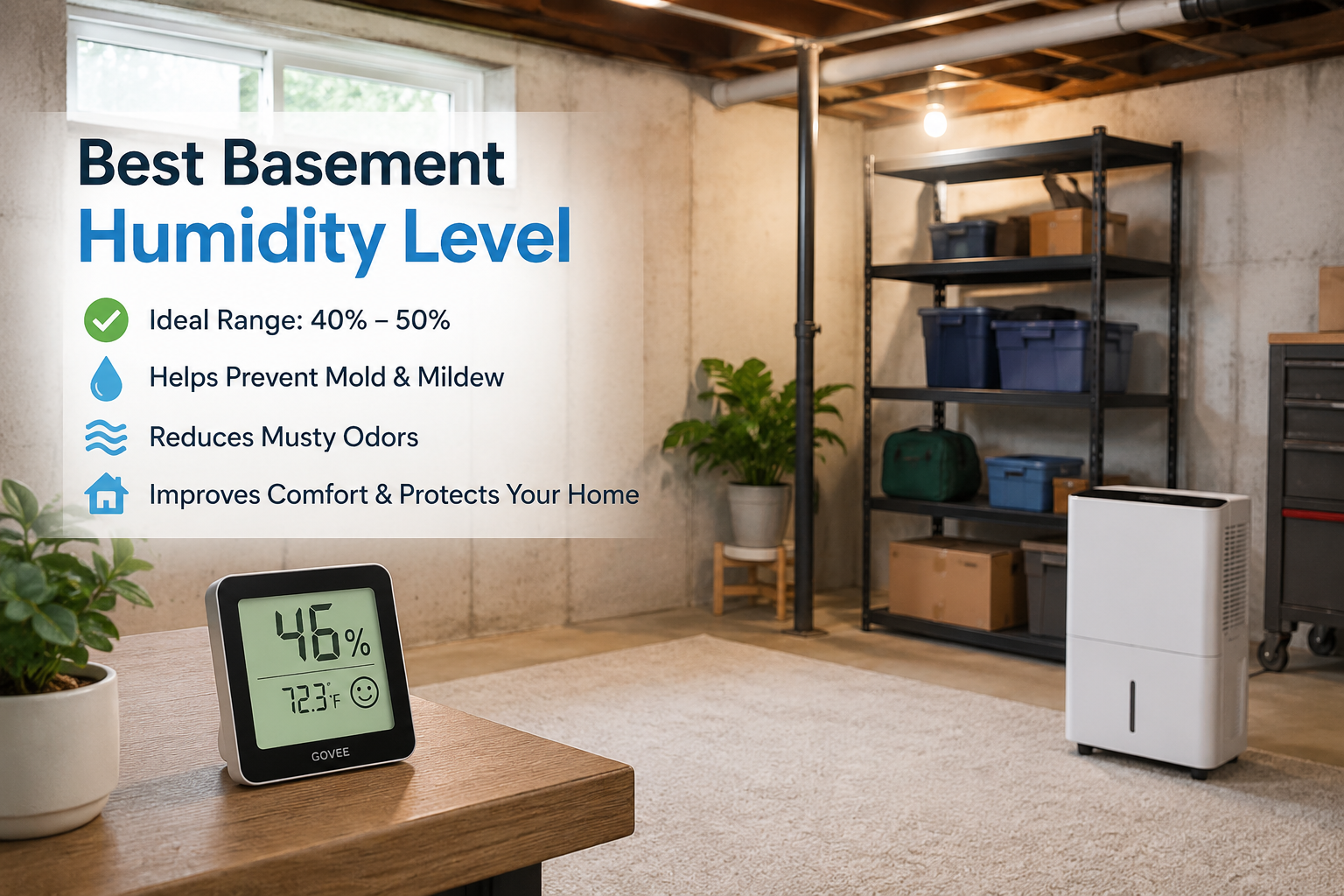
Best working range: around 40% to 50% relative humidity in most basements.
Main warning signs: stale smell, condensation, damp storage, or a room that feels clammy even when it looks clean.
Best use of the reading: compare the number with weather, room smell, and how quickly the basement dries.
Humidity Range Box
- 30%–50% -> Ideal
- 50%–60% -> Monitor
- 60%+ -> Risk
What is the best basement humidity level?
For most homes, the best basement humidity level is usually a range of around 40% to 50% relative humidity, not one perfect number. That is often the most practical balance between comfort and moisture control, especially in a space that tends to stay cooler, darker, and slower to dry than the rest of the house.
If you are wondering what basement humidity should be, this is the range many homeowners use as a working target because it is often low enough to reduce clammy air, stale smells, and lingering dampness without treating every short spike as a major problem.
In other words, the ideal basement humidity and the recommended basement humidity are usually not about chasing a single exact reading. The goal is to keep the basement in a stable, moderate range that feels dry enough to stay usable and less likely to hold excess moisture.
A reading near 60% is not always an emergency, but if it keeps returning or stays there for days, it usually means the basement is moving out of a good working range and into a level that deserves closer attention.
What different basement humidity levels usually mean
| Basement humidity reading | What it usually means | Practical next step |
|---|---|---|
| 30-40% | Often dry and controlled in many basements | Usually fine if the room feels comfortable and there are no signs of dryness or stale air |
| 40-50% | Good basement humidity for most situations | Treat this as a strong working range and keep watching for seasonal changes |
| 50-60% | Still manageable, but no longer ideal in many basements | Monitor the pattern more closely, especially if the basement smells musty or dries slowly |
| 60-70% | Often too humid for a basement if it stays there | Check whether the reading repeats, look for condensation, and consider whether the room needs better moisture control |
| 70%+ | High humidity in a basement and usually a warning sign | Treat it as a sustained moisture concern rather than a comfort issue |
A normal basement humidity level is not just about what the meter says once. It is about whether the room stays in a safe, usable range over time. For many basements, 40% to 50% is the most reliable target, while readings above 60% usually mean the space is getting too damp to ignore.
If you are asking whether 60 humidity is too high for a basement, the practical answer is that it often is when it becomes a pattern. If you are seeing 70 humidity in a basement, that is usually a stronger sign that the room needs attention.
Best basement humidity level by situation
The best humidity for a basement can shift slightly depending on how the space is used and how it behaves. The target still stays in a moderate range, but the reading matters more when the room already shows moisture clues.
| Situation | What to aim for or watch for |
|---|---|
| Finished basement | Try to keep the space in a stable mid-range because soft furnishings, flooring, and closed rooms can hide dampness more easily |
| Unfinished basement | Watch for visible clues like damp concrete, condensation on pipes, or stale storage even if the number does not look extreme |
| Basement used for storage | Stay closer to a dry, steady range because cardboard, fabric, and paper absorb moisture quickly |
| Basement with musty smell | Even a borderline reading may matter more if the room already smells stale or heavy. If that is happening, it helps to understand why a basement can smell musty |
| Basement after rain | Repeated spikes after wet weather often matter more than one isolated reading. In that situation, it also helps to understand why a basement can feel humid even without rain when the pattern starts lingering |
| Summer | Warm outdoor air can make the basement feel heavier and slower to dry, so keeping the room in a steady moderate range becomes more important |
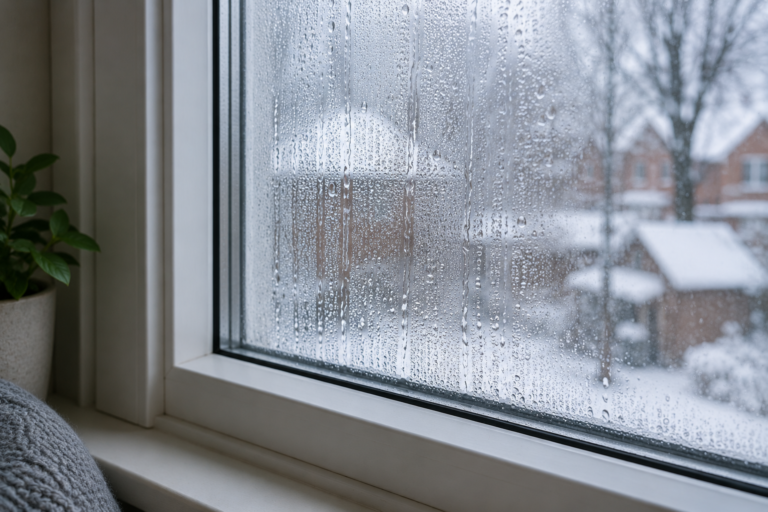
| Winter | The air may feel drier, but cold walls, pipes, and windows can still collect moisture if indoor humidity stays too high |
If you want to compare room air readings with material dampness, the difference between a humidity meter vs moisture meter is useful because they do not answer the same question.
A stable humidity range matters more than one perfect number
A single reading does not tell the whole story. A basement can briefly rise after humid weather, after rain, or after staying closed up for a while without that one number defining the room.
What matters more is the pattern. If the basement repeatedly feels musty, develops condensation, dries slowly, or keeps returning to the same high reading, that tells you more than one isolated spike ever could.
This is why a good basement humidity level is really about consistency. A room that stays near a healthy working range is usually easier to trust than one that swings between dry and damp every few days.
If you need help choosing the actual machine target, the next step is what setting a basement dehumidifier should be on. If you want the mold-risk side of the question, the right companion article is what humidity level causes mold in a basement.
Why basement humidity behaves differently from upstairs rooms
Basements are usually surrounded by cooler materials and get less natural airflow. Even finished basements may still hold moisture longer than the rest of the house because they are lower, darker, and slower to dry. For a direct comparison of the conditions behind this difference, review why basements are often more humid than upstairs rooms.
That means a reading that seems only mildly high upstairs may affect the basement more strongly. The room can feel heavier, fabrics can hold smell, and windows or cool surfaces can collect moisture much sooner than expected.
This is why basement humidity should be treated as its own room pattern, not just as an extension of the general house.
Signs your basement humidity is already too high
You do not need a meter to suspect a problem, but a meter helps confirm what the room already seems to be saying. It also helps to compare those clues with signs the basement is already holding too much moisture.
- musty smell
- clammy air
- stale storage
- window condensation
- damp-feeling fabrics
- slow drying after cleaning or laundry
- cooler corners that feel slightly wet or stale
If several of these are happening together, the basement is very likely holding too much moisture, regardless of whether you have measured it yet.
How to measure basement humidity properly
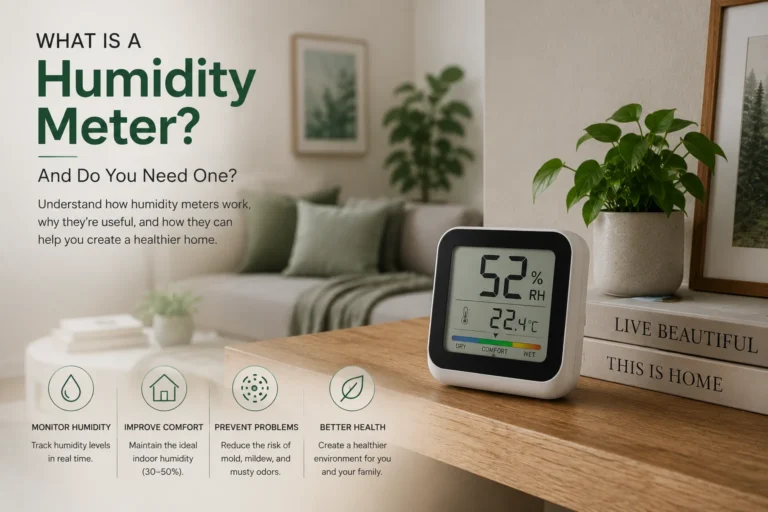
Use a hygrometer or humidity meter in the basement itself, not just upstairs. Placement matters. Try to keep the meter away from direct window contact, away from vents, off the floor, not pressed against a wall, and in the area you actually want to understand.
It also helps to measure during different conditions: dry weather, rainy weather, after laundry use, after the basement has stayed closed, and in morning and evening. The pattern matters more than one isolated reading. If you want how to measure the room more accurately, compare a humidity reading with suspicious wall areas too.
Common mistakes people make
- Treating basement humidity like whole-house humidity
- Measuring once and assuming the result is final
- Ignoring smell and room feel
- Waiting until condensation or damage is obvious
If the basement feels damp even without a leak, compare the reading with if the basement feels damp even without a leak and a dry-looking basement can still hold moisture before you assume the meter is the whole story.
Quick Basement Check
- ✓ Basement feels dry
- ✓ No condensation
- ✓ No musty smell
- ✓ Humidity below target
Basement humidity checklist
| Check | What to look for | Why it matters |
|---|---|---|
| Humidity reading | Around a stable moderate range | Helps define baseline |
| Musty smell | Stronger in damp periods | Sign of excess moisture |
| Window or pipe moisture | Repeated condensation | High humidity clue |
| Stored items | Stale or damp feeling | Material impact |
| Weather pattern | Worse after rain or humidity | Helps explain room behavior |
If your basement feels damp, stale, or inconsistent through the year, checking the humidity level is one of the simplest ways to understand what the room is actually doing before you try to fix it.
Frequently asked questions
What is the best basement humidity level?
For most basements, a steady range of around 40% to 50% relative humidity is a practical target.
What is the ideal humidity for a basement?
The ideal basement humidity is usually not one exact number. It is a moderate range that keeps the space feeling dry, stable, and less prone to damp conditions.
What is a normal basement humidity level?
In many homes, a normal basement humidity level falls somewhere in a moderate range rather than near the upper 60s or 70s.
What should basement humidity be?
A basement should usually stay around 40% to 50% if possible, with attention needed when readings keep climbing above that range.
Is 60 humidity too high for a basement?
It often is if the reading stays there consistently or appears alongside musty smell, condensation, or slow drying.
Is 70 humidity in a basement bad?
Yes, in most basements that is a high reading if it lasts, and it usually points to a space that is holding too much moisture.
What should basement humidity be in summer?
In summer, the goal is still a stable moderate range, but it becomes more important because warm, moist air can make basements feel heavier and slower to dry.
What should basement humidity be in winter?
In winter, the basement may feel drier overall, but indoor moisture can still collect on cold surfaces if the room stays too humid.
Does a finished basement need a different humidity range?
The target range is usually similar, but finished basements often hide moisture more easily behind flooring, furniture, and closed rooms.
What basement humidity level helps prevent mold?
A lower, steadier humidity range helps reduce mold-friendly conditions, but no single number guarantees prevention on its own. If you want the full threshold and risk explanation, see what humidity level causes mold in a basement.
Similar Posts
What Is the Ideal Indoor Humidity Level for a Home?
Understand the humidity range that usually works best for comfort, condensation control, and healthier indoor air.
Dehumidifier vs Air Purifier: Which One Do You Need?
Understand whether you need a dehumidifier, an air purifier, or a different approach based on moisture, odor, and air-quality symptoms.
What Is a Humidity Meter and Do You Need One?
Understand what a humidity meter measures, when it helps, and how it supports better home moisture decisions.
Signs Your Home Has Too Much Humidity
Learn the signs your home has too much humidity, what to check first in each room, and when repeated condensation, musty air, or damp surfaces need action.
Best Air Purifier for Mold-Related Concerns
Compare air purifiers for mold-related concerns and understand when a purifier helps versus when moisture control matters more.
Why Do Windows Sweat in Winter?
Why do windows sweat in winter? Learn what cold glass and indoor humidity reveal about condensation patterns in your home.